
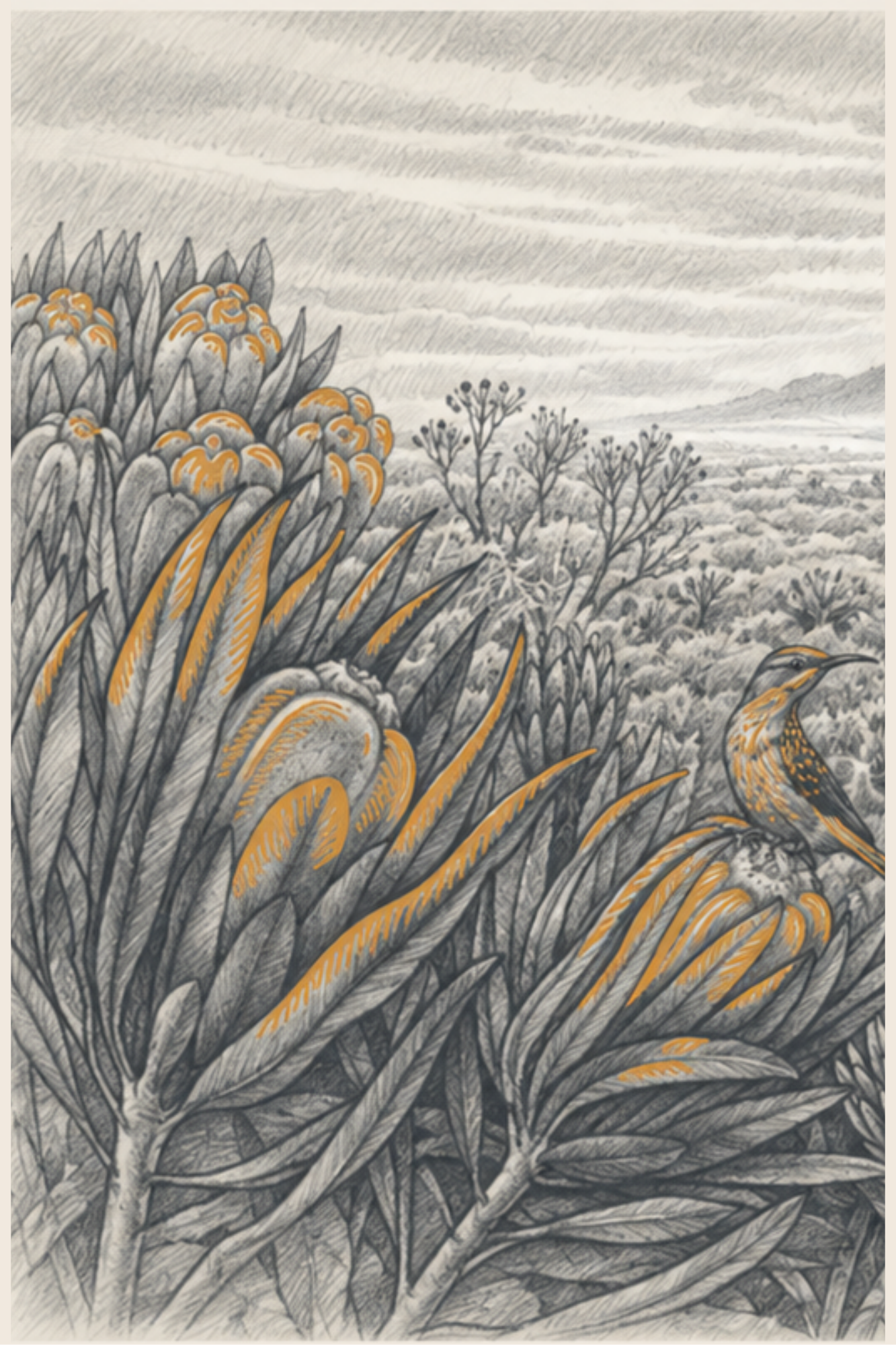
Protea Nitidus
A plant in Nitida’s garden that inspired the label illustrations.
Nitida · The story behind our label
Every illustration begins with the place we call home: its plants, its wildlife, and the details that make Nitida unmistakably Nitida.
More than a label
Our labels bring together the character of our wines and the landscape that surrounds us.
We have won awards for our wine labels, but their story begins well before they reach a bottle. Each design was developed to reflect what Nitida stands for, capture the character of the wines, and give our friends far away a little piece of home.
The illustrations were hand drawn using inks made from leaves of Nitida trees. They take inspiration from protea nitidus in our garden, local Renosterveld plants, and some of the creatures who share the farm.
Made by hand
The artwork starts with a close look at the natural details around the estate. Nitida tree leaves become ink; the forms of local plants and wildlife become part of the label’s visual language.
The labels bring together the living landscape of Nitida and the character of each wine.
Inspired by the living landscape of Nitida.
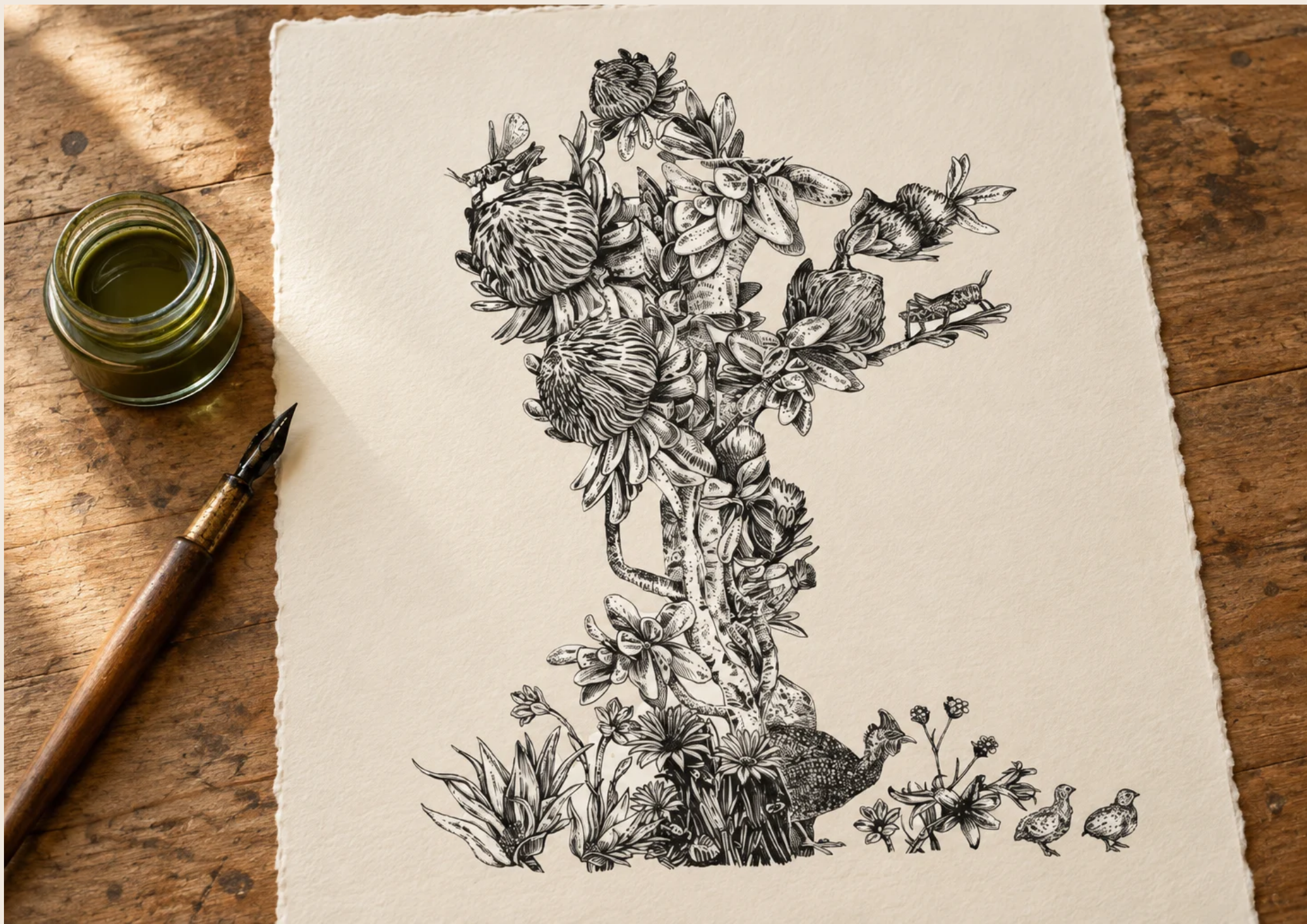
The life around us
The labels feature plants and wildlife connected to the farm and the surrounding Renosterveld.
A plant in Nitida’s garden that inspired the label illustrations.
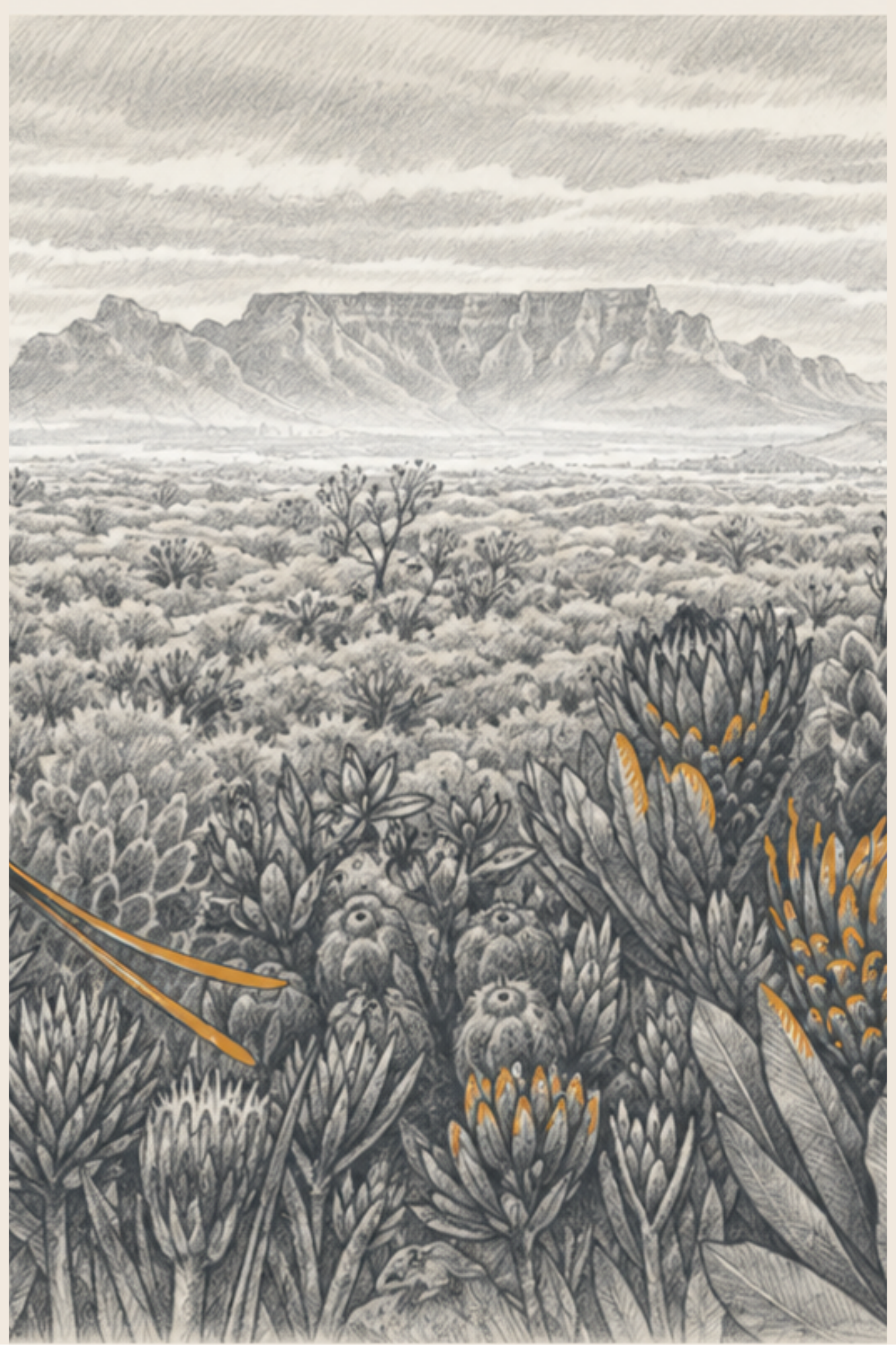
Local plants from this landscape feature in the hand-drawn artwork.
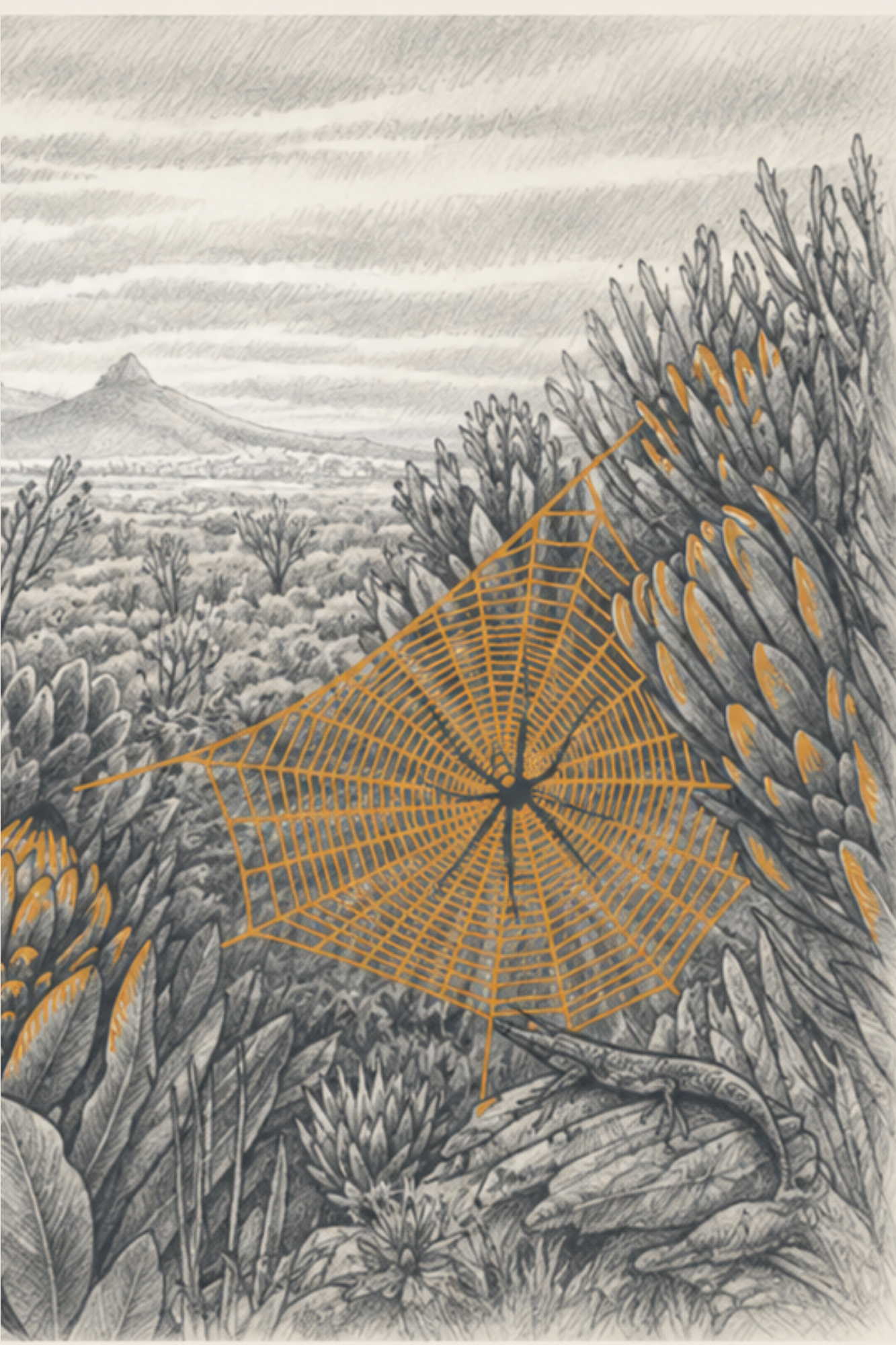
A delicate detail woven into the illustrated fynbos.
A sense of place
Each bottle carries a small reminder of the farm: its wines, its living landscape, and the stories still being drawn.
The living labels of Nitida
Some are regular visitors. Some are harder to spot. And one has never actually lived here. Every one has a story, and a reason for finding its way onto our labels.
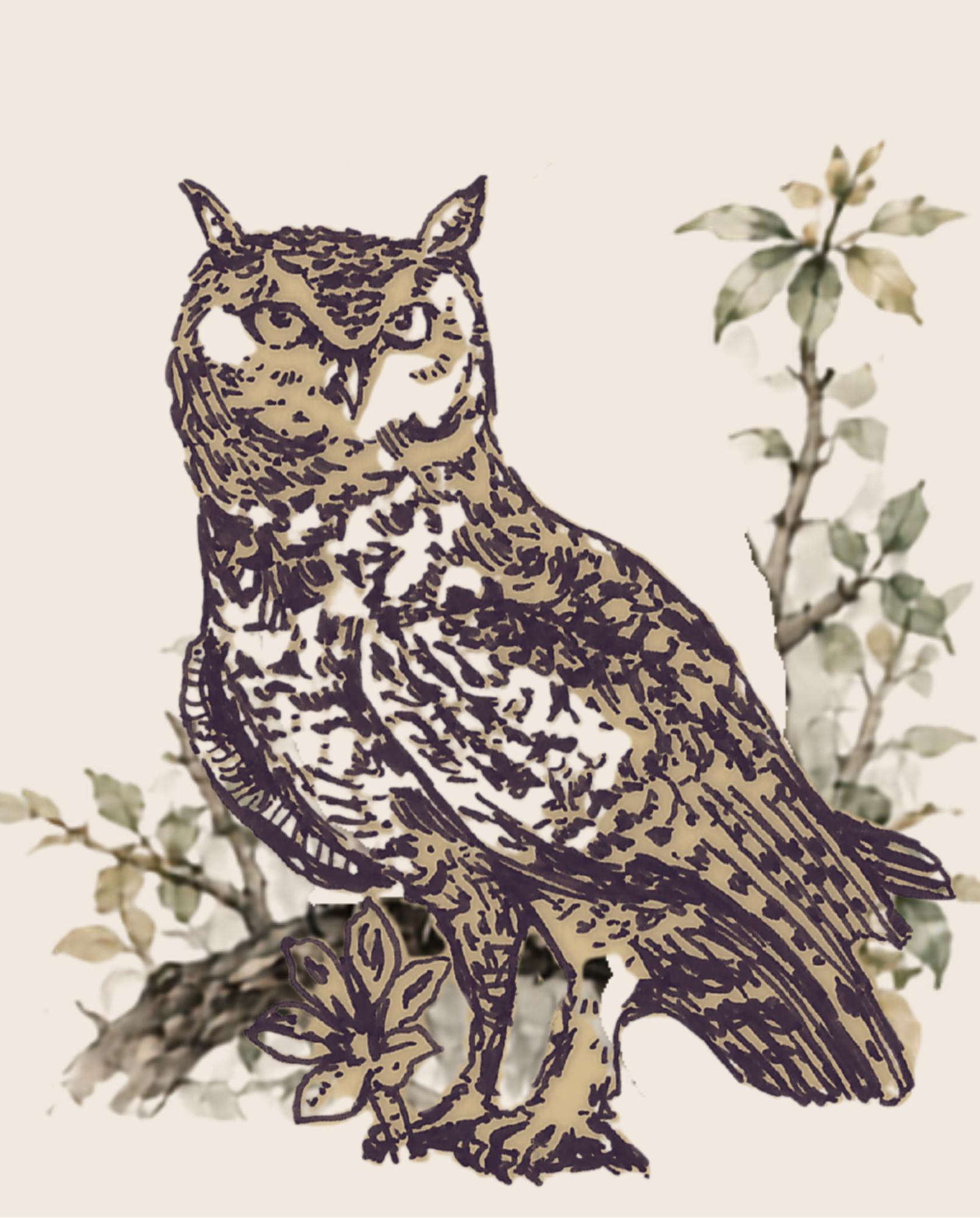
01 / The Independent One
Bubo capensis
We hand-reared an abandoned baby who took our chicken offerings for six weeks, giving nothing in return, then flew away without a backward glance, just as he was meant to.
Today, the tree in front of the office and the telephone poles on the road to the main house are favourite places to look for an owl.
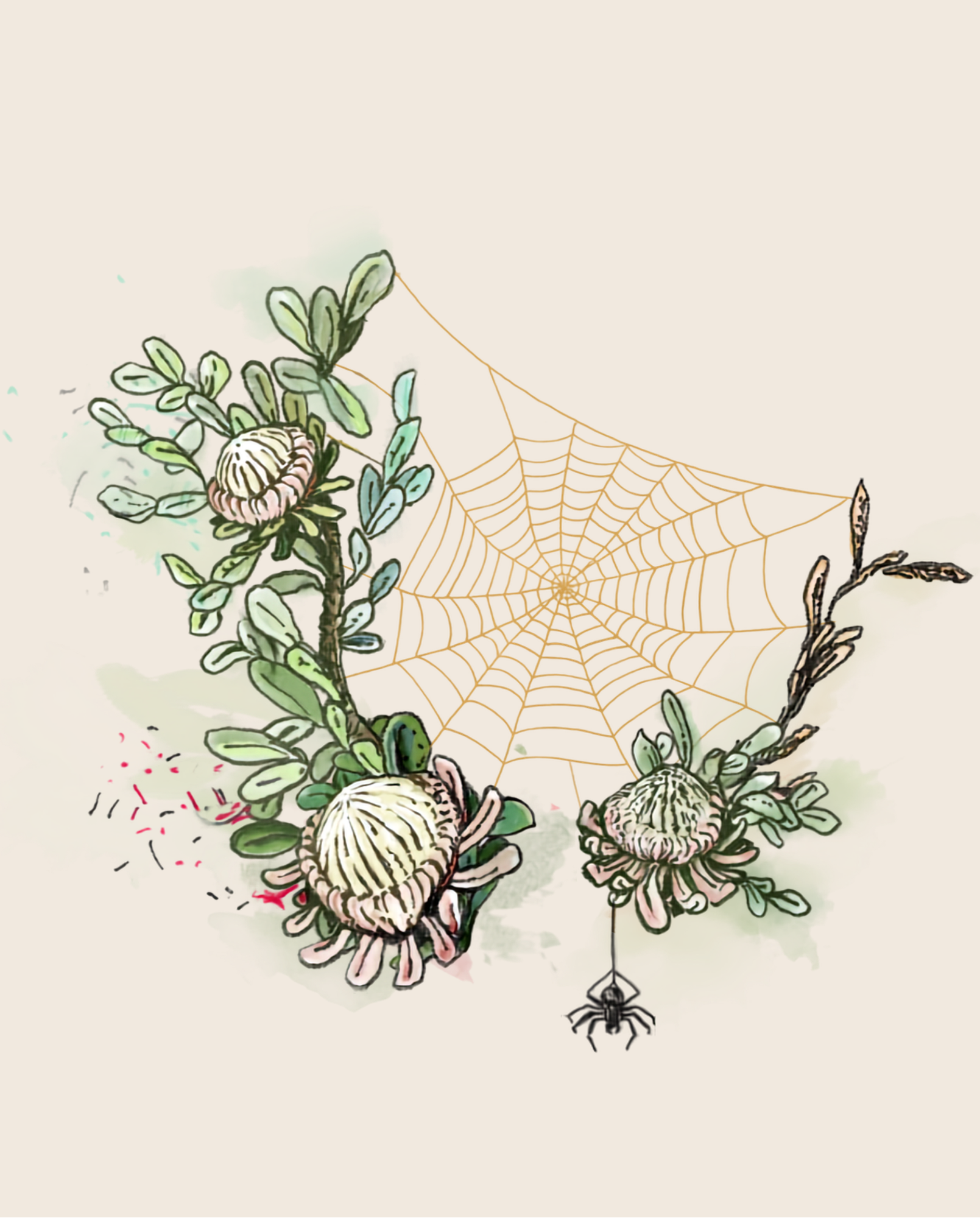
02 / The Original
Trichonephila spp.
Her illustration appeared in one of our very early label proposals, just because. Once she was there, we couldn't take her out.
We decided she was the Golden Orb who drives Cassia crazy with her webs every morning. That is how the tradition of hiding critters across our labels began.
Every few seasons, the grass behind the office can be covered in golden webs and shining dew. The spiders seem to spin their silk afresh each evening. Hard workers, the lot of them.
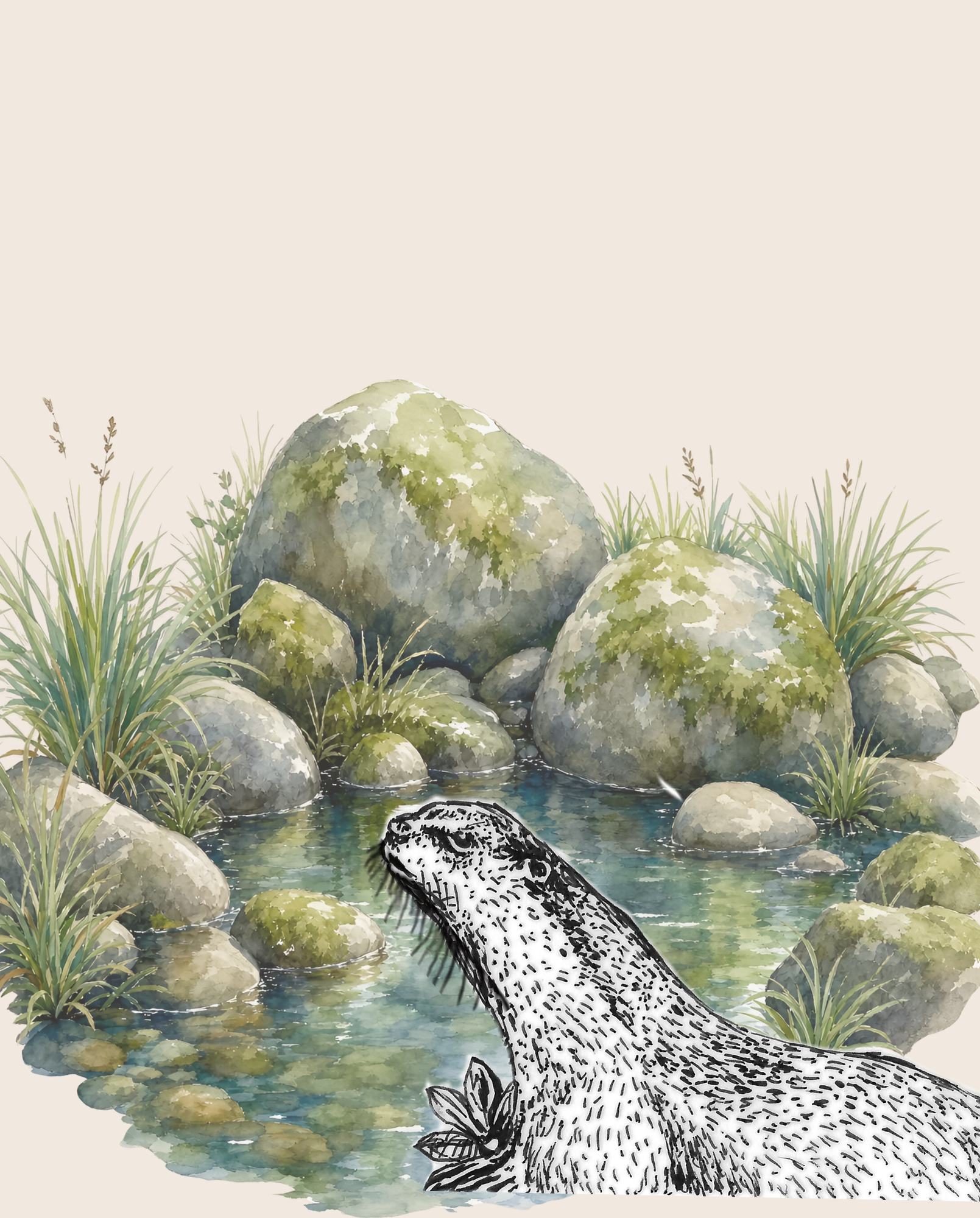
03 / The Dam Resident
Aonyx capensis
They arrived through the culvert under Tygerberg Road and settled on the far bank of the dam not long after Cassia was built.
We first knew they had moved in when they killed Wheaty's precious black swans. Since then, we've had regular sightings from the Cassia deck.
One evening, an otter found its way into Bernhard's swimming pool, and Riley the Staffie went in after it. It was a near thing: the otter shot through the electric fence and out, swimming faster than most things run.
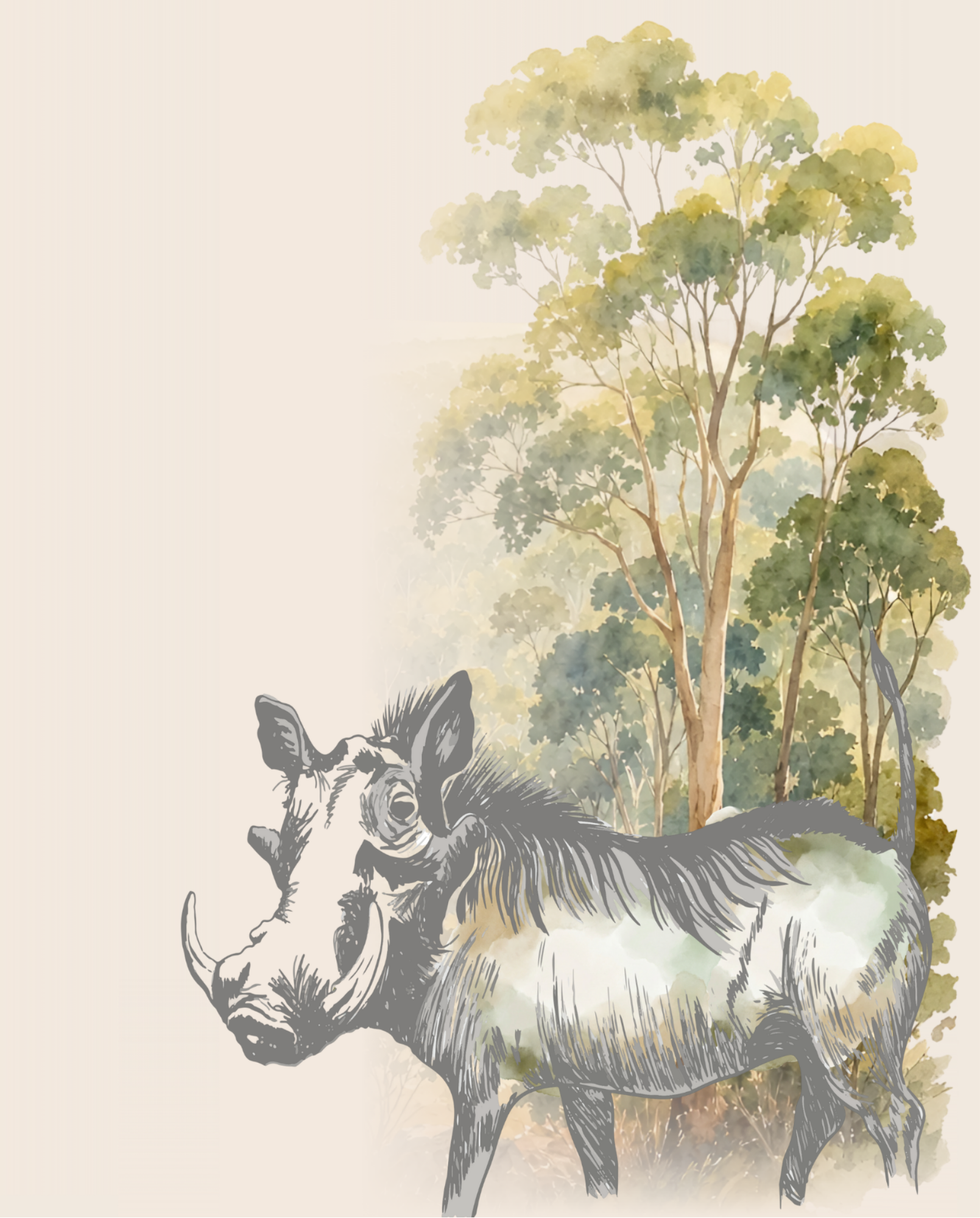
04 / A Tribute to Peta
Phacochoerus africanus
Peta, Bernhard's late wife, poured her creative energy into the Nitida brand. She drew our original labels and helped shape the parties, games and small details that made our club gatherings memorable.
The warthog was her favourite animal. After she passed away, we wanted to pay tribute to her love of the farm in the labels she had helped build.
So we include a warthog on every label, tucked away somewhere, even though it has never actually been seen on our farm. For a bit of fun, its backside appears on every back label too.
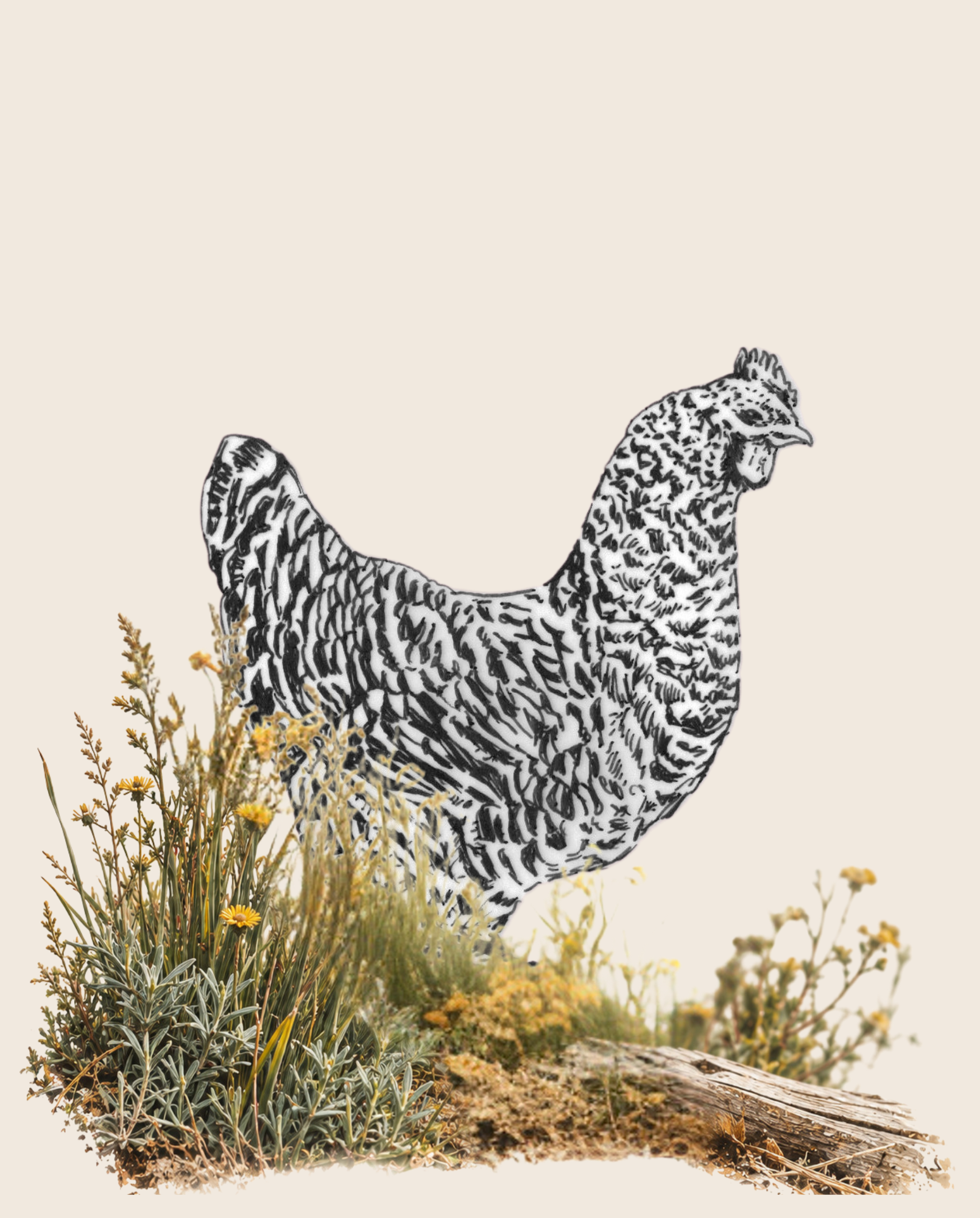
05 / The Farmyard Experiment
Gallus gallus domesticus
We brought fifty Koekoek chickens onto the farm to work as little “composting factories” in our permaculture garden. The idea was simple: let the chickens do some of the work while improving the soil.
One night, a genet found its way into the coop and killed thirty of them. But the genet wasn't the end of the story. A local two-legged predator developed a taste for chicken and returned night after night, leaving us with a broken coop and increasingly frantic birds.
Eventually, we gave up trying to keep chickens. The composting plan was sound; the reality, rather less so.
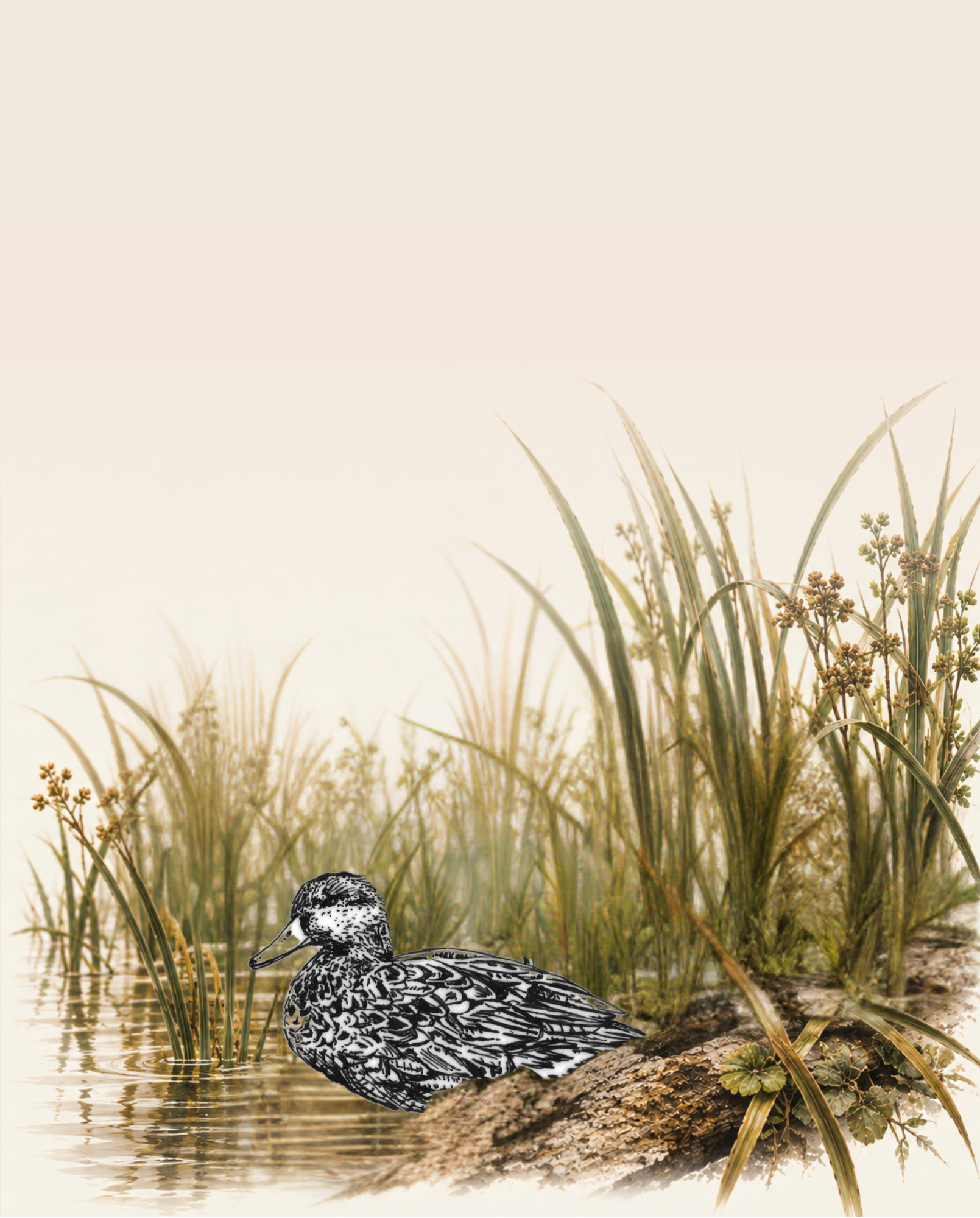
06 / The Sundowner Crowd
Anas undulata
The lower dam in front of the office has its own regular visitors. Yellow-billed Ducks, Pekins and Muscovies paddle around together, often with ducklings following close behind. It's a favourite spot for a late-afternoon pause.
One pair once tried to raise their brood in the reeds of our natural swimming pool. Unfortunately for them, a young human had already decided that the pool belonged to him. They spent much of the season being chased around by their very determined, much larger neighbour.
There's also been some concern around the office that our Yellow-billed Ducks may be getting a little too friendly with the Mallards on the dam.
For all their comings and goings, the ducks have become part of the everyday scene at Nitida. The dam simply wouldn't be the same without them.
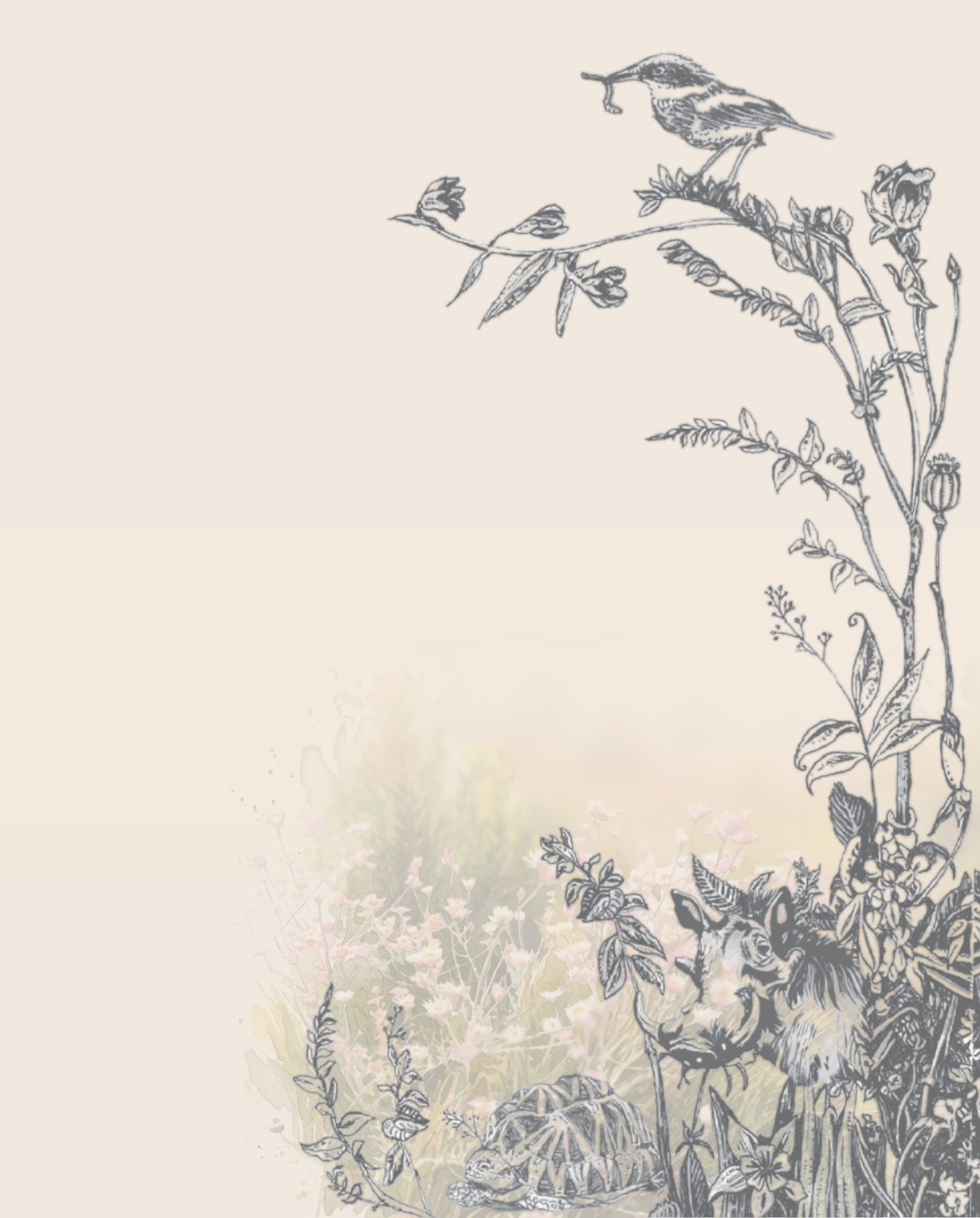
07 / A Landscape Worth Keeping
Renosterveld vegetation
Only a small fraction of West Coast Renosterveld remains. Much of it has been lost to agriculture, which claimed the fertile soils on which this vegetation grows.
The natural green belts we have kept untouched at Nitida form part of what remains.
Renosterveld belongs to the Cape Floristic Region. It may look modest at first glance, but look closely and an extraordinary variety of plant life begins to emerge.
In a single square metre of our Renosterveld, close to a thousand individual bulbs can be found across a wide range of species. Many remain hidden for most of the year. Then spring arrives, and briefly, they are everywhere.
Renosterveld appears on every one of our hand-drawn Nitida labels — a reminder of the landscape around us, and the importance of keeping it.
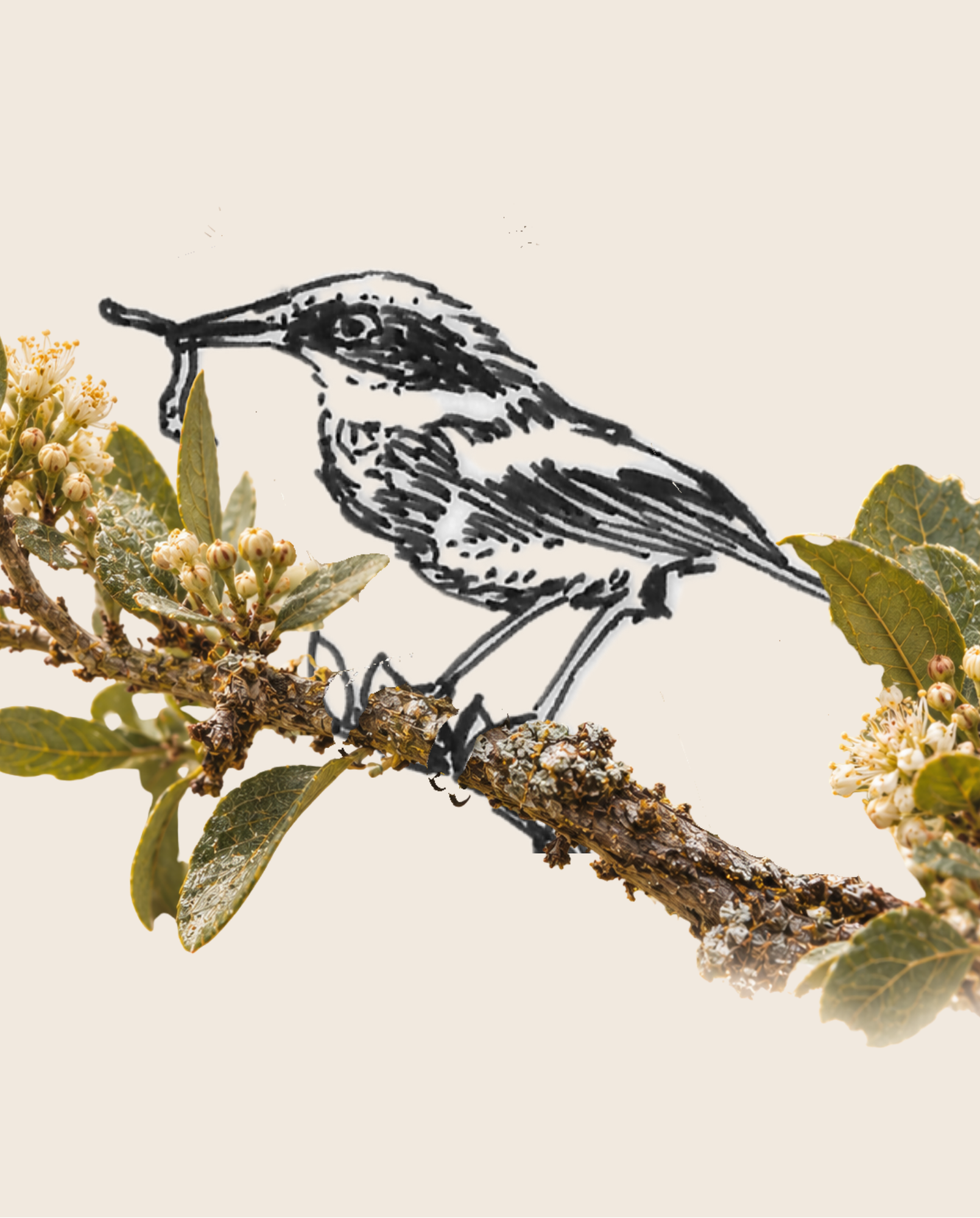
08 / The Little Bird You Hear First
Batis capensis
The Cape Batis likes the trees and bushes around our office, particularly near the door. It is one of Bernhard's favourite birds.
You will often hear it before you see it. Its distinctive three-beat whistle carries with surprising force for such a small bird.
Its nest is a neat little cup woven from plant material and spider silk. One of our favourite nesting spots is a side branch of the tree beside the office door.
The first Cape Batis we found was sitting in plain sight, at eye level. Even so, it took us weeks to spot it. We had walked past it every day, unaware that it was there.
So, when you walk past the office, listen first. Then look carefully.
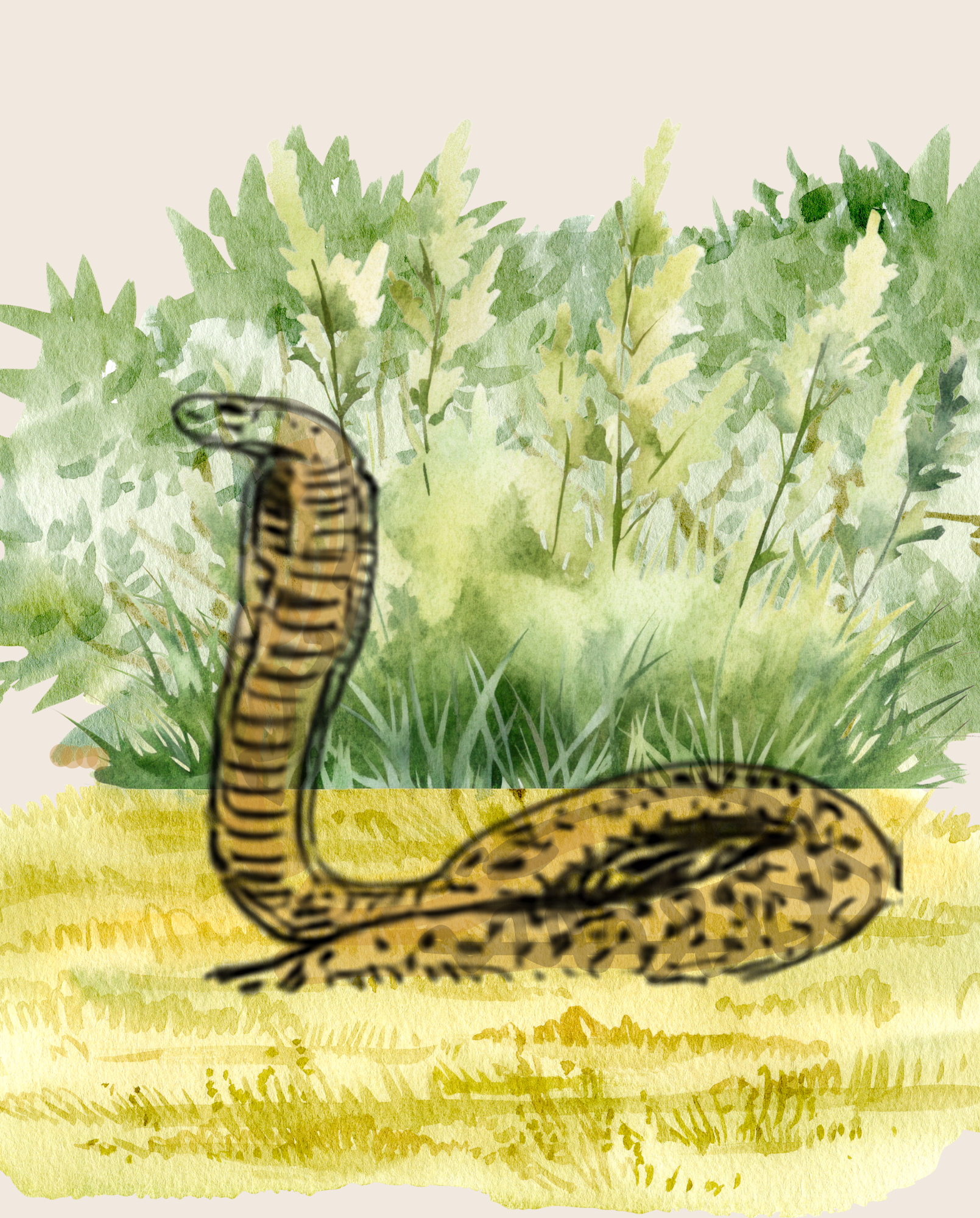
09 / The Uninvited Visitor
Naja nivea
Cape Cobras sometimes come to our ponds for a drink. They are shy and wary of people, and given the chance, they will generally leave us alone.
We have had a couple find their way into the house over the years. During one encounter, a cobra passed within a foot of the cat, who stayed perfectly still throughout.
Another encounter was less peaceful. Two of our dogs attacked a cobra, with one distracting it from the front while the other went in from behind.
When we can, we arrange for cobras to be relocated. We suspect some of the ones we have moved have found their way straight back.
They may not be the visitors we hope to meet, but they are part of life on the farm. The best approach is to give them space and respect their place here.
Stay up to date with news, special offers and events happening at Nitida.